Preventive measures
Melanoma screening
Malignant melanoma is the form of cancer with the highest growth rates. The number is expected to double again by 2020. The reasons for this are the…
Find out more: Melanoma screening
Preventive measures
Cardiovascular disease is the most common cause of death in industrialised countries. It is also becoming more frequent in the working population. Demographic change and longer working lives will make prevention in the workplace ever more important.
Raising the retirement age by three years increases the likelihood of an employee suffering a heart attack or stroke by 30%. This affects skilled workers in particular, who will have to work longer in future because there are too few young people coming through.
Against this background, cardiovascular prevention will increasingly become a task for companies too, because vascular damage develops gradually over years. During that time, an employee's performance is demonstrably reduced by up to 6 hours a week until they go off sick. For many employees, a stroke or heart attack leads to early retirement; on average, an employee is absent for 21 days.
SwissCare has set itself the goal of bringing cardiovascular examinations to where people spend most of their lives: the workplace. The benefits are obvious. Everyone gains from the time saved, and the workplace reaches people who would not otherwise see a doctor.
Our cardiovascular programme covers the whole process from analysis to evaluation. It begins with an initial medical analysis, which identifies the key cardiovascular parameters and risk factors. The examination is complemented by a further innovative measurement technique.
Our doctors ask the employee about possible risk factors such as smoking, family or personal history, or known illnesses. They then determine the main cardiovascular parameters, from which a risk profile of the employee can be drawn up. These values are complemented by an innovative measurement technique that the company can choose freely. Which technique to use should be decided on the basis of the workforce structure. The technique also motivates employees on another level: they receive an examination that they could not get from their GP:
Pulse wave velocity (PWV) is a measure of arterial stiffness. Stiffness reveals the biological age of the arteries and, with it, the risk of conditions such as heart attack and stroke.
Measuring intima-media thickness with high-resolution ultrasound is a very suitable method for determining the risk of arteriosclerosis. We expressly measure the IMT only. On the current evidence, we advise against a full carotid examination in people at no particular risk, because it does more harm than good.
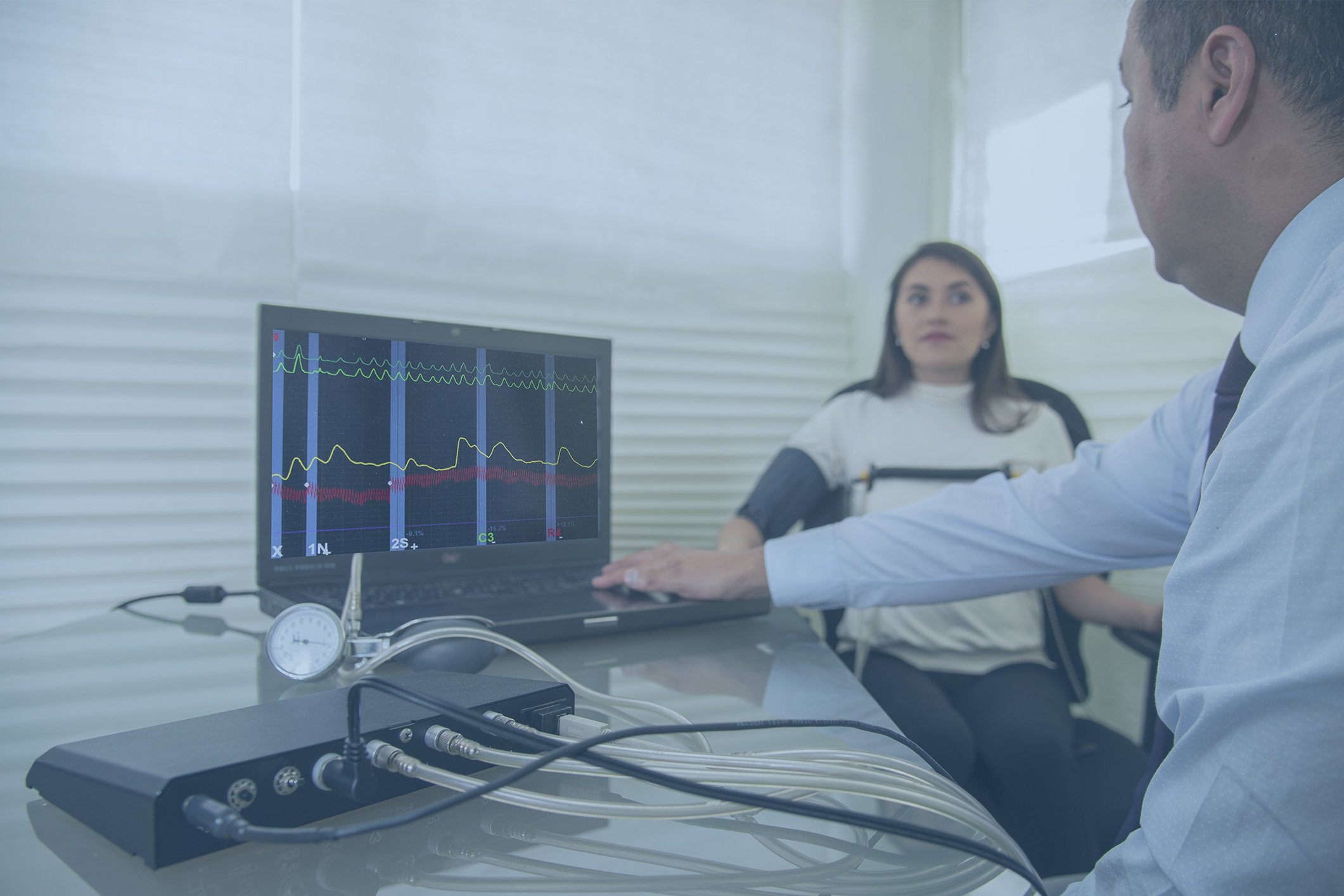
Cardio-neuro screening is based on a measurement technique used on the International Space Station. It is entirely free of risk and pain and delivers fast, accurate results. During the examination, a three-lead ECG is recorded, along with the blood pressure curve, continuous blood pressure and autonomic regulation, that is, the interaction between heart rate and blood pressure.
The Arriba software can produce an individual risk forecast for a heart attack or stroke within the next ten years for anyone aged 35 or over. The resulting value (Arriba score) shows how likely the person is to suffer a heart attack or stroke within the next 10 years. An easy-to-follow visualisation makes the individual risk clear. At the same time, the potential and relevance of specific lifestyle changes (exercise, diet, stopping smoking) are explained and planned.
If the Arriba score is between 5% and 15%, employees are transferred to SwissCare's own intervention programmes. If an employee clearly exceeds certain thresholds, we refer them to their GP for care. Right from the first conversation, employees are shown how they can reduce their risk by changing their lifestyle. The interventions are varied, and the programmes allow them to be specified further and followed up.
Motivational interviewing: in this intervention, employees are motivated through specific techniques to make a real lifestyle change. The medical conversations take place by telephone and last 30 minutes on average.
Health coaches support employees after the examination for about 18 weeks, in four to eight telephone conversations in total. The average conversation lasts 20 minutes. You receive tips on how to build a healthier lifestyle easily into your daily routine.
The benefit of both interventions has been scientifically validated. For example, health coaches were able to improve long-term blood glucose (HbA1c) in people with diabetes by 15%. The combination of the two interventions has proved particularly effective. First, a 'roadmap' is drawn up in the medical consultation, and the health coaches then support the employees on that basis.
Several questions arise in the evaluation phase: What effects did the measures have? Were the goals reached? What can be optimised, and how? Was the investment worthwhile? The effects are evaluated through a follow-up survey of the employees who took part in an intervention, and the success of the different interventions can be compared. An optional re-check, which documents health status before and after the intervention, allows the benefit to be determined more precisely. A calculation of the reduction in average heart attack or stroke risk achieved by the interventions gives the number of events actually avoided and the cost-benefit ratio. Once a continuous process is in place, activities can be focused ever more on the high-risk groups, so that the effectiveness of prevention keeps increasing.
Preventive measures
Malignant melanoma is the form of cancer with the highest growth rates. The number is expected to double again by 2020. The reasons for this are the…
Find out more: Melanoma screening
The HRV Scan measures current stress levels and individual stress regulation ability. The analysis is based on pulse rate and…
Find out more: New screenings for 2026
Preventive measures
The Papillon study, the world's largest population study, carried out in Germany by the Papillon thyroid initiative, found in almost…
Find out more: Thyroid ultrasound