Many people do not even know they have glaucoma
There is a need for better information and public education about this condition. In industrialised countries, the proportion of undiagnosed cases is estimated at…
News

Screening for sleep disorders, anxiety and depressive symptoms by the treating doctor (GP or specialist) is recommended. There is currently no consistent evidence on whether atopic dermatitis is also linked to a higher risk of cardiovascular disease. The usual preventive measures (including advice on exercise and smoking cessation) can reduce cardiovascular risk in this patient group too.
Standardised epidemiological data show that fatigue (OR 2.97; 95% CI 2.65–3.34), daytime sleepiness (OR 2.66; 95% CI 2.34–3.01) and insomnia (OR 2.36; 95% CI 2.11–2.64) are more common in people with atopic dermatitis. The one-year prevalence of fatigue is higher in adults with eczema than in a healthy control group (32.8% vs 27.5%) [1]. Sleep disorders can be associated with emotional and behavioural problems, headaches, attention disorders and other health impairments, and, according to the speaker, should be covered in the patient's history [1]. Sleep specialists need to be involved only for patients whose sleep disorders persist even when the skin condition is adequately treated.
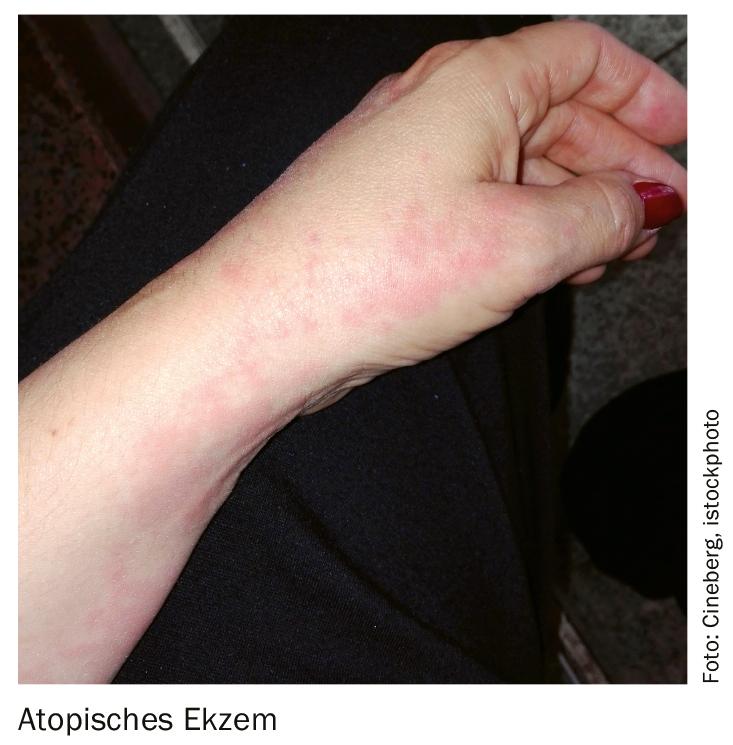
A meta-analysis published in 2018 [2] demonstrated statistically significant associations between atopic dermatitis and depressive symptoms, in adults (pooled OR 2.19; 95% CI 1.87–2.57) as well as in children (pooled OR 1.27; 95% CI 1.12–1.45). For anxiety, data are available only for adults (pooled OR 2.19; 95% CI 1.75–2.73). The statistical analysis also showed positive correlations between atopic dermatitis and suicidality (pooled OR 4.32; 95% CI 1.93–9.66).
As a clinical implication of these findings, the authors conclude that depressive symptoms, anxiety disorders and suicidality should be taken into account when treating patients with atopic dermatitis. Relieving the symptoms of the skin condition alone can also have a positive effect on comorbid mental wellbeing.
According to a case-control study published in 2018, carried out in Canada over ten years among people aged 15 to 55, patients with persistent eczema (five or more eczema-related doctor visits over five years) have a moderately increased risk of suicide. This risk is not independent of general health status and can be reduced by adequate suicide prevention [3].
The evidence on a possible correlation between atopic dermatitis and cardiovascular disease is inconsistent. According to Ascott et al., adults with atopic dermatitis have an increased risk of various cardiovascular diseases such as stroke and heart attack, depending on the severity of the atopic symptoms [4]. Epidemiological data from Silverwood et al. likewise indicate that severe atopic eczema in particular is a potential cardiovascular risk factor [5]. Drucker and Harvey postulate an explanatory model in which various mediating variables influence the link between atopic dermatitis and cardiovascular disease (e.g. sleep disorders, depression, smoking, overweight, high blood pressure, lack of exercise) [6].
Source: AAD Annual Meeting 2019, Washington (USA)
Mirjam Peter, M. Sc.
There is a need for better information and public education about this condition. In industrialised countries, the proportion of undiagnosed cases is estimated at…
A dementia diagnosis should not be made lightly. Among the people around the patient, it provokes about as strong a reaction as a cancer diagnosis. And yet it is important,…
The sudden cardiac death of an apparently healthy athlete is shocking. Despite its low incidence, work is under way on ways of detecting SCD early. Among…